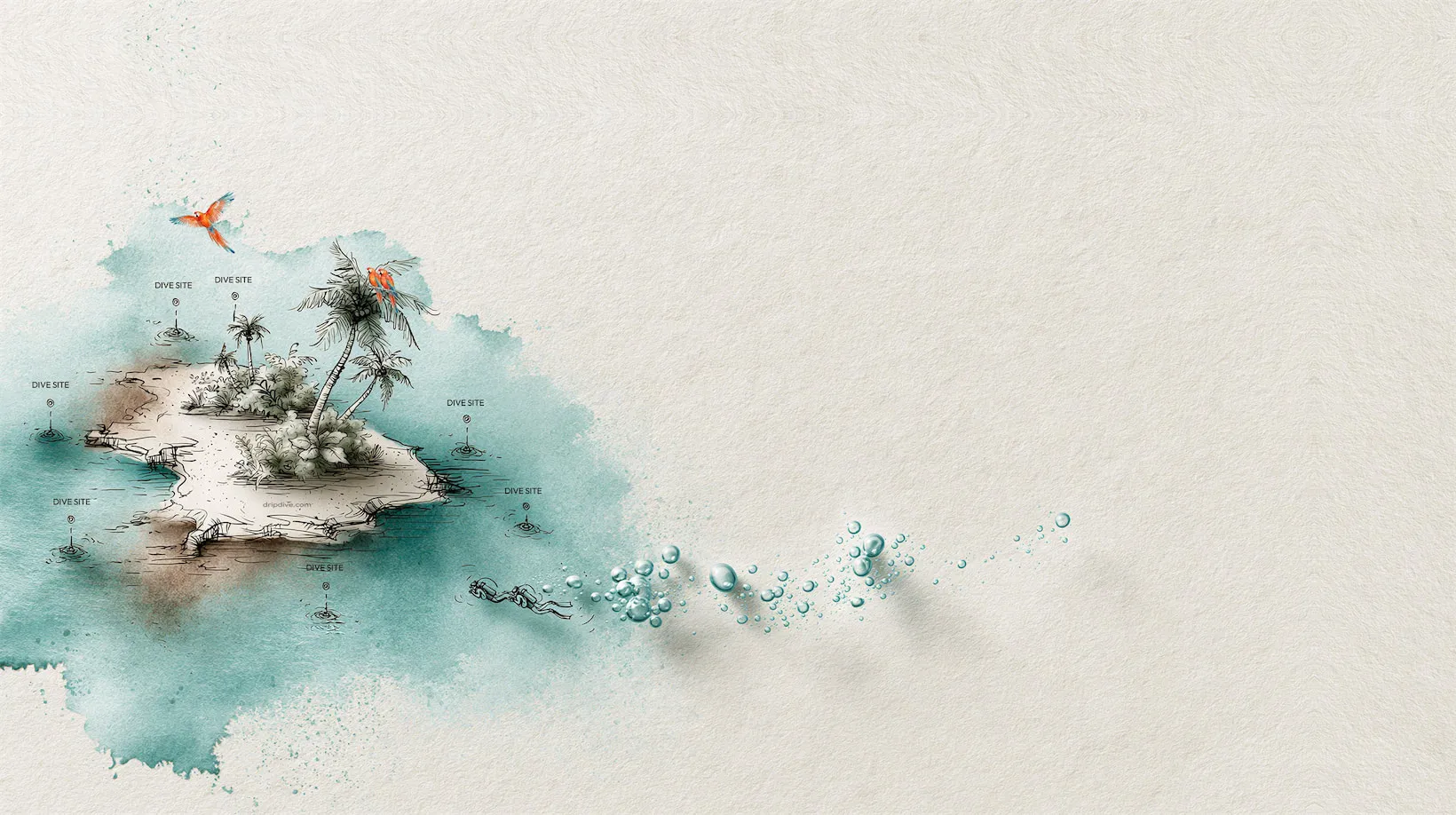
Palancar isn’t one dive. It’s four, running north to south along about 3 miles (5 km) of Cozumel’s south-west shelf edge: Gardens, Horseshoe, Caves and Bricks. Each has its own drop-in and its own difficulty rating, so “let’s dive Palancar” is never a complete plan.
If it’s your first wall, pick Palancar Gardens. It rates the gentlest of the four, and it’s the only one that scores as well for fish as it does for coral. Horseshoe is the natural next step, and both take an Open Water card. Caves and Bricks start deeper and rate harder, so shops normally want an Advanced card for those.
How deep you go is a plan, not a property of the reef. The shallowest coral sits about 23 ft (7 m) down, the wall falls past 120 ft (37 m), and where your dive lands between those numbers is your guide’s call. You can snorkel Palancar too, from a boat over the same reef, looking down on the shallow coral.
Who decides which section you get? I put that question to a divemaster here recently. On the boats he works, company boats and charters alike, the captain drives and the site call is his. He makes it in the first minutes on board, watching how divers gear up: how they stand with the kit, how they operate it.
After a few thousand dives, he said, he can tell straight away who is a real diver and who is puffing their chest, and his read is almost always right. The card in your pocket sets the floor. How you handle your gear can decide whether you see Caves or stay at Gardens.
Quick facts
- Depth dived
- 30–90 ft9–27 m
- the wall keeps falling past 120 ft / 37 m
- Certification
- Open Water
- Advanced usually asked for Caves and Bricks
- Reef system
- Mesoamerican Barrier Reef
- largest transboundary reef system on earth
- Length
- ~3 mi5 km
- as dived; the park plan counts Palancar and Colombia as one reef
- Visibility
- 80–150 ft24–46 m
- operator-quoted; nobody publishes a measured basis
- Current
- Mild to moderate drift
- varies by section and day; every dive is a drift
- Closed
- Apr–May and Aug–Sep
- CONANP reef-rest rotation, different months by section
- Getting there
- Boat only
- 30–55 min from San Miguel
- Marine park fee
- 225 pesos (~$13)/day
- mandatory, per diver, every day you dive
- Snorkeling
- Yes, from a boat
- same reef as the divers, coral about 26 ft / 8 m down
- Best known for
- Coral formations
- three of the four sections rate 5 of 5
What Palancar Reef actually is
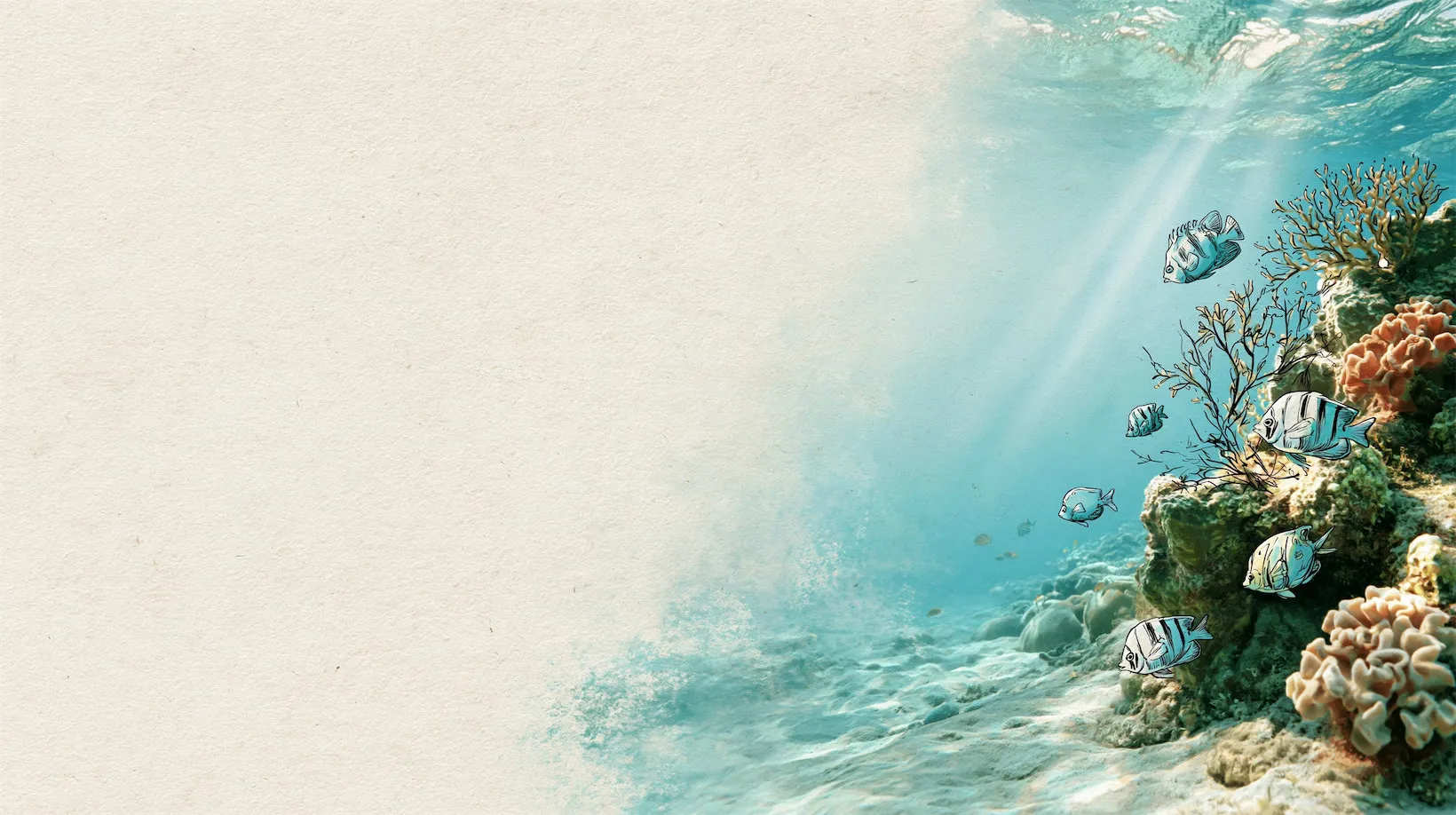
Palancar is the stretch of reef along the edge of Cozumel’s shelf, on the leeward side of the island, where the sea floor drops away. The reef builds into coral towers and buttresses along that lip, cut through with sand-floored canyons. Then it stops, at a drop-off that keeps falling past 120 ft (37 m).
It runs about 5 km (3 miles) as divers work it. Where Palancar ends is a naming convention, not geology. Mexico’s park plan treats Palancar and Colombia as one continuous reef of 6 to 7 km.
The whole structure belongs to the Mesoamerican Barrier Reef, the largest transboundary reef system on earth. It sits inside Parque Nacional Arrecifes de Cozumel, between Punta Dalila to the north and Colombia to the south, and it is marked on the dive site map.
One correction, because you’ll read the opposite everywhere. Palancar’s fame is usually credited to Jacques Cousteau, the French diver whose films introduced most of the world to the sea. He did come, in 1954, but the film that put Cozumel on the dive map was Mexican, and not his.
The four sections sit far enough apart that a boat drops you on one, and the current carries you along that section only. That’s why Palancar reef diving always means one of the four, never the whole thing.
The four Palancar dives, compared
Local dive masters rate Cozumel’s reefs one to five on four axes. Here is where the four Palancar sections land, alongside the depth each is dived to.
| Dive | Planned profile | Difficulty | Current | Coral | Marine life | Card |
|---|---|---|---|---|---|---|
| Gardens | 40-90 ft12-27 m | 2 of 5 | 2 of 5 | 4 of 5 | 4 of 5 | Open Water |
| Horseshoe | 30-90 ft9-27 m | 2 of 5 | 2 of 5 | 5 of 5 | 3 of 5 | Open Water |
| Caves | 40-90 ft12-27 m | 3 of 5 | 3 of 5 | 5 of 5 | 3 of 5 | Advanced |
| Bricks | 40-90 ft12-27 m | 3 of 5 | 2 of 5 | 5 of 5 | 3 of 5 | Advanced |
The pattern is easy to read once you see it. Difficulty climbs as you move south, and the southern three trade fish for structure: bigger formations, more dramatic terrain, fewer things swimming past you.
What marine life will you see at Palancar Reef?
Turtles and nurse sharks year-round, and spotted eagle rays from November to March. Palancar trades fish density for structure, so you meet fewer animals here than on the shallow mid reefs, and the ones you meet are bigger. The turtles are mostly hawksbills, with greens and loggerheads passing through less often.
| Animal | Where at Palancar | When |
|---|---|---|
| Sea turtles | All four sections | Year-round |
| Nurse shark | Horseshoe, and under ledges at Caves and Bricks | Year-round |
| Spotted eagle ray | The deep wall at Horseshoe and Caves | Nov–Mar, peak Dec–Feb |
| Southern stingray | The sand flats at Bricks | Year-round |
| Splendid toadfish | Under ledges at Caves and Horseshoe | Year-round, a lucky find |
Between the big animals, each section has its own everyday fish. Gardens has french grunts and hogfish, Horseshoe yellowtail snapper and horse-eye jacks. Caves has barracuda and tiger grouper, Bricks queen angelfish and spiny lobster. Gardens is the only one of the four that scores as highly for marine life as for coral.
The splendid toadfish spends the day wedged under a ledge with only its face showing, so finding one comes down to a guide who knows a particular den. Yucab, closer to town, is the reliable place to look.
How deep is Palancar Reef?
Ask how deep Palancar is and every source answers differently. That is not sloppiness. Depth here is a dive plan, not a property of the reef.
The structure spans roughly 23 ft (7 m) at its shallowest coral to about 120 ft (37 m), where the wall leaves recreational limits. Below that it keeps falling. Where you spend the dive between those two numbers is your guide’s decision, made before you get in.
The 90 ft (27 m) in the table above marks the planned deep segment, not a charted floor. Published figures elsewhere run anywhere from 70 to 120 ft (21 to 37 m) for the same four sections, because each one is somebody’s plan quoted as a measurement.
So the number on your computer is not the reef’s. It is set by the site your guide picks and the no-decompression limit that ends every dive here. Each section page carries its own profile.
Which Palancar dive should you pick?
If it is your first wall: Gardens. Wide canyons, open passages to navigate, and the gentlest ratings of the four. The full Gardens briefing has the route and the depth profile.
If you want the biggest coral: Palancar Horseshoe. Same beginner-friendly difficulty and current as Gardens, built around a U-shaped amphitheatre wide enough to make out from the surface, and rated a full five for formations.
If you want swim-throughs: Palancar Caves. This is the maze section, tunnels and archways cut through the coral with daylight in view, and it is the one part of Palancar with genuine overhead. Operators want an Advanced card for it.
If you want the far end of the reef: Palancar Bricks, the southernmost of the four. It takes its name from a barge that capsized here in the 1950s and lost a cargo of red bricks. They are still on the sand, and divers have arranged some of them into the island’s name.
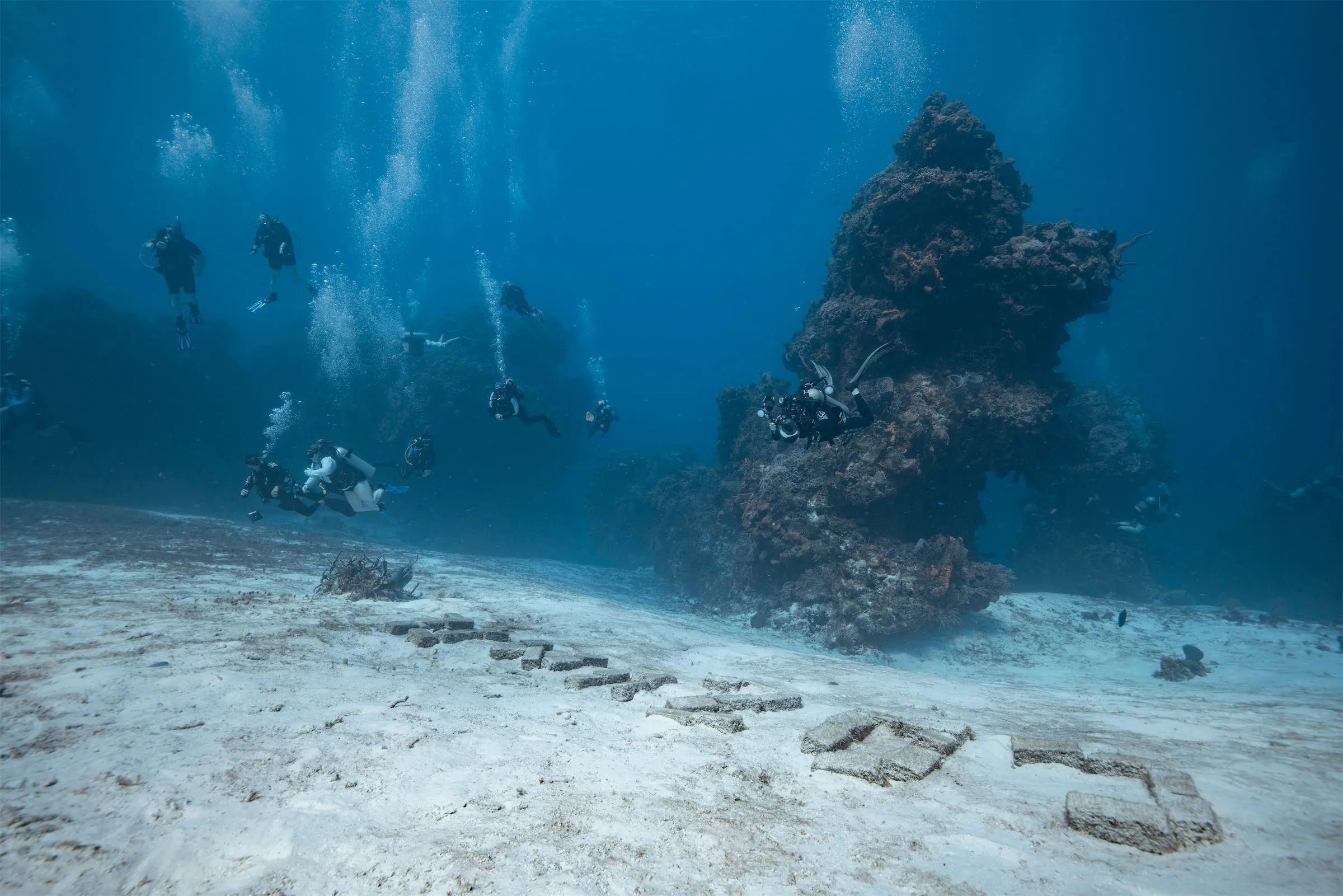
Most operators run Palancar as the first tank of a two-tank south trip, and pair it with something shallower for the second.
If you are choosing between Palancar and somewhere else entirely, the full Cozumel dive site guide sorts every reef on the island by difficulty and depth.
What makes Palancar different from Cozumel’s other reefs
Cozumel’s mid reefs, Yucab, Tormentos, Paso del Cedral, are shallow, fish-heavy and forgiving. They stay inside 60 ft (18 m) and the reef sits under you the whole dive.
Palancar is the opposite trade. You get scale, structure and a vertical drop-off, and you give up some of the fish density. Three of the four sections rate a maximum five for formations, which only Santa Rosa, Colombia Deep and the Punta Sur sites also manage.
The other difference is depth discipline. On a shallow reef the seabed tells you where you are. On Palancar there is no visual floor below you for most of the dive, so depth creep is the thing to watch rather than current.
Can you snorkel Palancar Reef?
Yes, from a boat, over the same reef the divers are on. Snorkelers and divers are not seeing the same thing, though, and the difference is the whole answer.
The coral sits about 26 ft (8 m) below the surface. In Cozumel’s water that is clearly visible from above, so you get a good look down at coral heads and reef fish. You are not swimming among them, and a breath-hold to the reef is not a casual thing at that depth.
Everything Palancar is famous for is below snorkeling range. The canyons, the Arch, the swim-throughs at Caves, the amphitheatre at Horseshoe and the drop-off itself are all diving.
If snorkeling is what you came for, the shallow mid reefs closer to town give you more for the same effort. If Palancar itself is the draw, it is worth getting certified first. Or read what you can dive without a certification to see how far a supervised intro dive gets you.
Current, visibility and certification
Every dive here is a drift. The boat drops you at one end and collects you at the other, so stamina is not the question.
Current runs south to north and is usually mild to moderate. How strong it gets at Horseshoe and Bricks depends who you ask. The same reference sources describe both as slow and as strong, so treat any single figure with suspicion.
Visibility is the number everyone quotes and nobody measures. Operators advertise 80 to 150 ft (24 to 46 m), and no source gives a basis for it. What is on record is the cause. Palancar sits on the sheltered leeward coast, and the water there is stirred up mainly during nortes.
Shops guide Open Water divers at Gardens and Horseshoe every day, and a guide can hold a group shallower than the charted profile. Horseshoe in particular takes everyone from beginners to advanced divers. Shops still set their own bar, which our guide to choosing a Cozumel dive shop covers, so it is a conversation to have on the boat rather than a surprise at depth.
Check the month-by-month conditions before you pick dates, or the best time to dive Cozumel if your timing is flexible.
When Palancar is closed
For four months of the year, half of Palancar is shut. The park rests each section on a rotation so the coral can recover, and the two halves close at different times.
This is CONANP’s reef-rest programme, the estrategia de arrecifes saludables, running since 2019. The park administers it and federal agencies enforce it. But the calendar is agreed cycle by cycle with the operators’ advisory council, not fixed by decree. The months can move, so confirm with your shop before you book one section in particular.
Closures for damage are a separate matter. El Cielo shut in August 2026 for síndrome blanco, a coral disease. That was an emergency measure, not part of the rotation.
Palancar in the marine park
The whole complex sits inside the national marine park, and the rules are not suggestions. The fee, the nine in-water rules and the diver safety limits are the same here as anywhere else in the park. One rule is not.
Group size. The park’s management programme names Palancar’s four sections explicitly and caps them at eight divers per guide by day, six at night. Colombia, next door to the south, is capped at six around the clock. Eight is a ceiling, not a target; plenty of shops run four to six.
Frequently asked questions
What is the most famous reef in Cozumel?
Palancar. Nearly every south-bound dive trip out of San Miguel is built around it, and it is the reef most visitors have heard of before they arrive. Three of its four sections rate a maximum five for coral formations. Only a handful of other reefs on the island reach that mark.
Which Palancar dive is best for beginners?
Palancar Gardens. It rates the lowest of the four for difficulty and current, its coral canyons are wide, and the overhead maze is further south at Caves rather than here. Horseshoe is the next step. Caves and Bricks both rate harder and normally ask for an Advanced card. On the two Open Water sites, Gardens and Horseshoe, the planned profile goes deeper than Open Water training depth.
Do you need to be certified to dive Palancar Reef?
Yes. Open Water is the minimum card for Gardens and Horseshoe; Caves and Bricks normally ask for Advanced. The marine park also requires a qualified Marine Park Divemaster or Instructor with every group, so no part of Palancar can be dived privately. Uncertified visitors are taken to shallower, more controlled sites instead.
Where is Palancar Reef?
Off the south-west coast of Cozumel, inside Parque Nacional Arrecifes de Cozumel, between Punta Dalila to the north and Colombia reef to the south. Every dive on it is a boat dive from San Miguel, a 30-to-55-minute ride down the leeward coast.
Is Palancar part of the Mesoamerican Barrier Reef?
Yes. Palancar sits inside the Mesoamerican Barrier Reef System, which runs more than 700 miles (1,100 km) from the Yucatan through Belize and Guatemala to Honduras. WWF calls it the largest transboundary reef system in the world, and Mexico’s park authority places Cozumel’s reefs within it. Cozumel sits near its northern end.
Planning a Cozumel dive trip? I live here and dive this island. Tell me your dates, your experience level, and what you want to see, and I will point you in the right direction, with a straight answer from someone on the island.
Last verified: August 2026. This is a living document; I update it when the data, the park’s rules, or my own diving changes.
A note on what this article is: a guide to the four Palancar dives and how to choose between them. The depths and ratings are the working numbers Cozumel’s dive guides plan with. The park rules and the closure calendar come from CONANP’s own documents. The snorkelling and certification answers come from a working Cozumel divemaster.