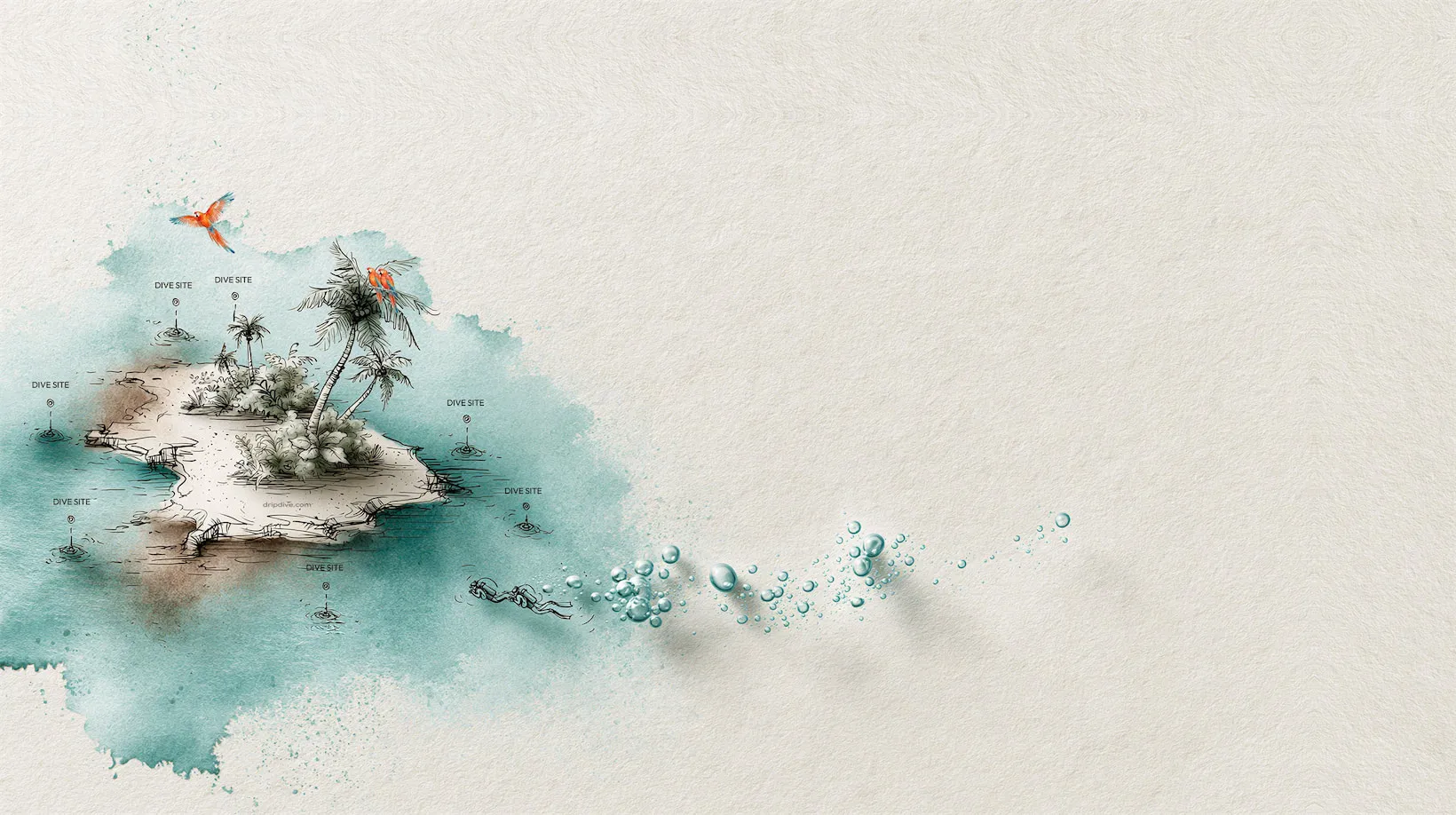
Cozumel’s dive sites run down the sheltered west coast in three bands: south, mid, and north, plus the C-53 wreck. Almost all of it is drift diving, so you float with the current along the reef while the boat follows your surface marker. The south holds the famous deep reefs, Palancar and Colombia. The mid reefs are shallower, thick with fish, the dives you will probably repeat. Up north the current runs hard, and that end is for experienced divers only.
Depth sorts the rest. The shallow reefs stay under 60 feet (18 m) and suit an Open Water diver. The walls and the deep south drop past 100 feet (30 m), and they want an Advanced card and a cool head in current.
Quick picks
- First dive
- Paradise Reef
- shallow, gentle; the classic first and night dive
- Most fish
- Paso del Cedral
- the densest marine life on the island
- Eagle rays
- Cantarell
- Eagle Ray Wall; winter, mid-Nov to March
- Bucket-list dive
- Devil's Throat
- deep overhead tunnel; advanced, experts only
The Cozumel reef system
Cozumel’s diving happens almost entirely on one side of the island. The reefs line the western, leeward coast, where the island blocks the swell from the open Caribbean. That is what keeps the water calm and the visibility high.
The reefs sit at the northern tip of the Mesoamerican Barrier Reef, the second-largest reef system on earth. Since 1996, they have been protected as a national marine park, Parque Nacional Arrecifes de Cozumel. That protection is a big part of why they are still so healthy.
The current runs south to north along the coast, so nearly every dive here is a drift. Each band dives differently. On the south reefs, you fly along vertical walls and past coral buttresses that rise from the deep. The mid reefs sit shallower, though several still pull a real drift. The north reefs run fast, sometimes three knots or more, and the island’s wrecks sit up this end too. The deeper you go, and the further from the island’s shelter, the harder the dive.
Sites by difficulty
Three things decide how hard a Cozumel dive is: how much current the site pulls, how deep it goes, and whether it has an overhead. An overhead is a swim-through or cavern where you cannot ascend straight to the surface. The table below includes the card operators usually expect. The ratings lean conservative. On a guided drift a good divemaster manages your depth, so a calm Open Water diver is fine on many sites rated intermediate.
| Site | Level | Min. cert | Current | Max depth | What it is |
|---|---|---|---|---|---|
| Paradise Reef | Beginner | Open Water | Mild | 44 ft13 m | Shallow, gentle, the classic first and night dive |
| Chankanaab Reef | Beginner | Open Water | Mild | 50 ft15 m | Sheltered, shore-accessible, easy |
| Palancar Gardens | Beginner | Open Water+ | Moderate | 90 ft27 m | The postcard Palancar dive; profile goes past OW depth |
| Tormentos | Intermediate | Open Water | Moderate | 60 ft18 m | Shallow reef of ledges and cleaning stations |
| Yucab Reef | Intermediate | Open Water | Strong | 60 ft18 m | Shallow drift, big fish schools |
| Paso del Cedral | Intermediate | Open Water | Strong | 60 ft18 m | The densest marine life on the island |
| C-53 wreck | Advanced | Advanced (AOW) | Moderate | 80 ft24 m | Sunken minesweeper; AOW to go inside, OW on the exterior |
| Palancar Bricks | Advanced | Advanced (AOW) | Moderate | 90 ft27 m | Coral towers over sand, deeper profile |
| Palancar Horseshoe | Beginner | Open Water+ | Moderate | 90 ft27 m | Coral amphitheatre and swim-throughs; profile goes past OW depth |
| Cantarell | Advanced | Advanced (AOW) | Strong | 100 ft30 m | Eagle Ray Wall; fast, far north |
| Santa Rosa Wall | Advanced | Advanced (AOW) | Strong | 90 ft27 m | The classic Cozumel wall drift |
| Palancar Caves | Advanced | Advanced (AOW) | Moderate | 90 ft27 m | Limestone swim-throughs and cavern light |
| Colombia Deep | Advanced | Experienced | Strong | 100 ft30 m | Deep pinnacles and swim-throughs |
| Punta Sur | Advanced | Experienced | Strong | 130 ft40 m | Deep, exposed, overhead; the Cathedral |
| Devil's Throat | Advanced | Experienced | Strong | 130 ft40 m | Deep overhead tunnel; experts only |
| Maracaibo | Advanced | Experienced | Strong | 130 ft40 m | The far south wall; strong current, big swell |
“Experienced” in the table means Advanced Open Water plus real comfort with depth and current, and with overhead where noted. The wall depths need one caveat. Where a wall is listed at 90 to 130 feet (27 to 40 m), it keeps dropping past recreational limits. The number is where the recreational dive stays, not the bottom.
My first ever dives here weren’t as an Open Water diver, they were just a Discover Scuba. So my first boat dive was Paso del Cedral, which this table calls intermediate. It wasn’t scary at all, and it never felt above my level. Quite the opposite. It was an enjoyable drift, and so beautiful: in one dive I saw nurse sharks, turtles, barracudas, groupers, parrotfish, a spiny lobster (one of those crab-looking things with the big antennae), and a lot of other fish, all over beautiful coral.
So I’d read these ratings as guidance more than rules written in stone. On a reef like this one, keep your calm and you’ll be good.
Sites by depth
Depth drives your no-decompression time and your air. Shallow is under 60 feet (18 m), medium is 60 to 100 feet (18 to 30 m), and deep is past 100 feet (30 m). On a two-tank day, operators usually put the deeper dive first, while you are freshest.
| Site | Depth range | Depth band | Region |
|---|---|---|---|
| Paradise Reef | 30-44 ft9-13 m | Shallow | North |
| Chankanaab Reef | 40-50 ft12-15 m | Shallow | Mid |
| Paso del Cedral | 38-60 ft12-18 m | Medium | Mid |
| Yucab Reef | 40-60 ft12-18 m | Medium | Mid |
| Tormentos | 50-60 ft15-18 m | Medium | Mid |
| Palancar Gardens | 40-90 ft12-27 m | Medium | South |
| C-53 wreck | 45-80 ft14-24 m | Medium | Wreck |
| Palancar Bricks | 40-90 ft12-27 m | Medium | South |
| Palancar Horseshoe | 30-90 ft9-27 m | Medium | South |
| Cantarell | 40-100 ft12-30 m | Medium | North |
| Colombia Deep | 60-100 ft18-30 m | Medium | South |
| Santa Rosa Wall | 40-90 ft12-27 m | Deep | Mid |
| Palancar Caves | 40-90 ft12-27 m | Medium | South |
| Punta Sur | 60-130 ft18-40 m | Deep | South |
| Devil's Throat | 80-130 ft24-40 m | Deep | South |
| Maracaibo | 80-130 ft24-40 m | Deep | South |
The south reefs
The south reefs are Cozumel’s headline diving: deeper, more dramatic, and where the walls begin. They also sit furthest from town, so expect a longer boat ride, roughly 30 to 55 minutes.
Palancar is the reef on every Cozumel postcard, a stretch of coral more than a mile (1.6 km) long. It breaks into four named sites, and which one you get changes the dive completely. Palancar Gardens is the gentlest and the usual introduction: coral towers and sandy channels a new diver can enjoy. It is also the one Palancar section with a deep edge, so the planned profile runs past Open Water training depth even though the terrain is beginner-grade; the full site briefing has the route and the depth profile.
Palancar Caves is the swim-through section, a maze of limestone tunnels and archways with daylight always in view. That is benign cavern diving, not true cave penetration. But it is overhead enough that operators want an Advanced card. Palancar Bricks and Palancar Horseshoe round out the complex, with deeper coral towers and an amphitheatre you can see from the surface.
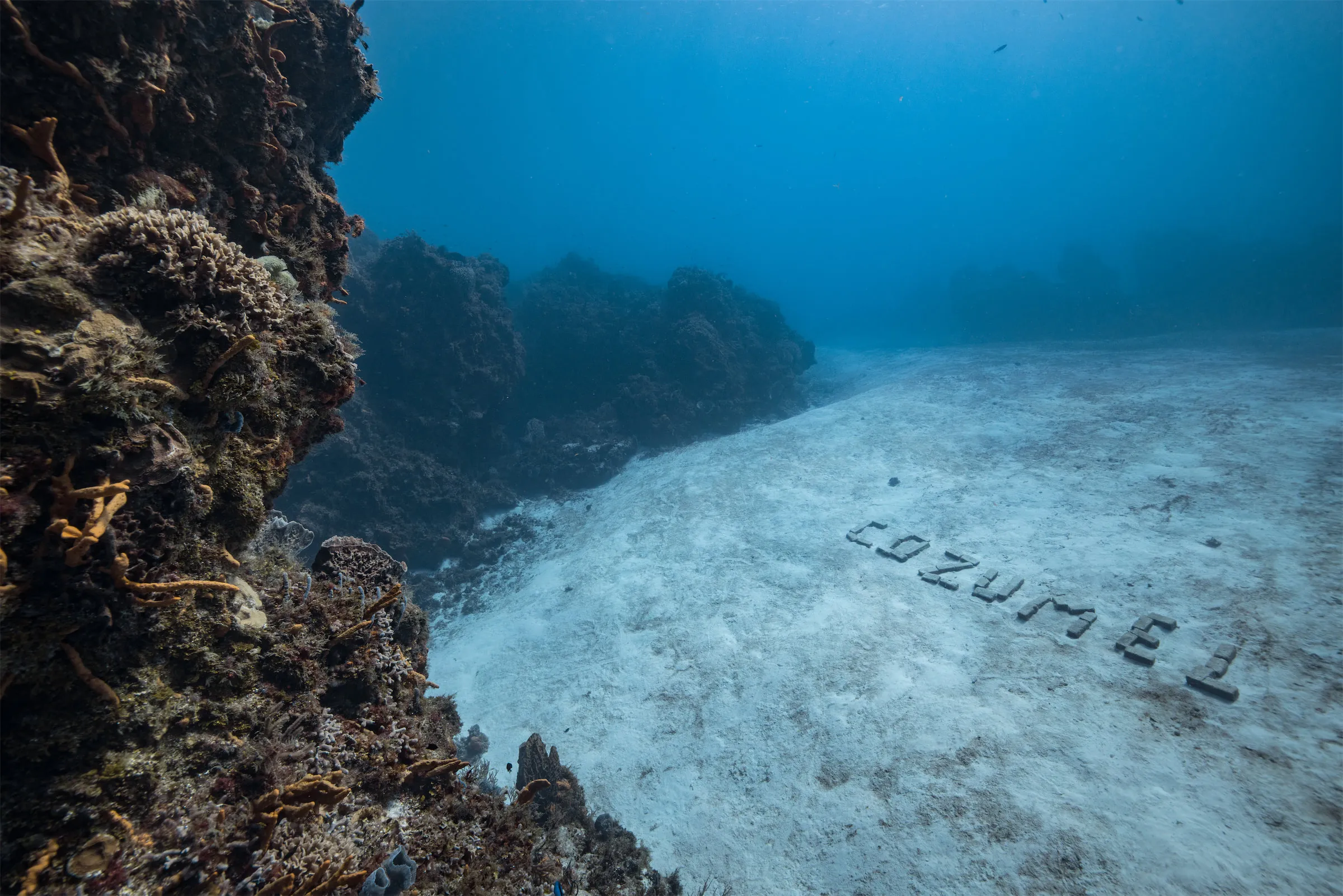
Colombia Deep sits just south, a set of massive coral pinnacles and swim-throughs on a wall that falls away into open blue. Shops sell it as Columbia Reef or Colombia Reef, depending on whose spelling they use; the marine park calls it Colombia Profundo. Its shallow neighbour, Colombia Shallows, is a separate and much easier dive.
Then the serious end of the island. Punta Sur is the exposed southern tip, home to the Cathedral cavern. It also holds Devil’s Throat, a deep vertical tunnel for experts only (see the safety notes below). Maracaibo is the southernmost reef, a strong-current wall reached by a long and often rough crossing. Only experienced groups dive it.
Who runs these: any competent operator dives the Palancar sites. For the deep south (Punta Sur, Devil’s Throat, Maracaibo), book a small-group shop that checks your experience first. Our guide to choosing a Cozumel dive shop covers how to tell the good ones apart.
The mid reefs
The south walls get the postcards. The mid reefs get the fish. The terrain is forgiving, but a few of these reefs run a brisk drift, which is what lifts them to an intermediate rating.
Most of the band sits under about 60 feet (18 m). Paso del Cedral has the densest marine life on the island: nurse sharks, turtles, big groupers, and the splendid toadfish, all but unique to Cozumel. It is run as a fast drift.
Yucab Reef and Tormentos are shallow, all coral heads, ledges, and cleaning stations, and favourite second-tank dives. Yucab can run a brisk current. Chankanaab Reef is the gentlest of all, sheltered and shallow, and the one site here you can reach from shore, at the adventure park.
The exception is Santa Rosa Wall, the classic Cozumel wall drift. The dive drops onto sand at 60 feet (18 m), and the wall beside the route falls past recreational limits. Officially it is an Advanced dive, though an experienced Open Water diver handles it with a good divemaster. It is popular, so take the quieter afternoon slots.
One quick fact-check, because the guides disagree and this one matters for your safety. You may see Santa Rosa listed at a maximum depth of around 30 feet (9 m). That is wrong. It drops well past recreational limits, into the 100-foot (30 m) range and beyond. Plan it as the deep wall dive it is, not the shallow reef someone mislabeled.
Who runs these: every operator dives the mid reefs; they are the standard second dive of the day. Our guide to choosing a dive shop covers how to pick one.
The north reefs and the wreck
North of town, the coast changes character. Paradise Reef sits right off the cruise piers, the closest site to downtown. It is the island’s classic night dive: shallow, gentle, and full of after-dark life. You see octopus, lobster, and the splendid toadfish out hunting.
Keep going north and the current picks up hard. Cantarell, also called Eagle Ray Wall, runs a strong to very strong current. From mid-November into early March, it draws schools of spotted eagle rays. It sits outside the marine park boundary and is a special trip for experienced divers, not an everyday dive.
The island’s signature wreck is the C-53 Felipe Xicotencatl, a 184-foot (56 m) minesweeper. It was sunk on sand near Chankanaab in 2000. Open Water divers can swim the exterior. Going inside, to the wheelhouse and engine room, is an overhead penetration that needs an Advanced card plus a wreck course.
Who runs these: most shops run the Paradise night dive; Cantarell is a special trip only some offer, so ask when you book. Our guide to choosing a dive shop covers how to vet one.
How Cozumel sites get dived: the drift
Almost every dive here is a drift dive, and it shapes how the sites work. Nobody anchors. Instead of swimming a loop back to the boat, you and your group descend and let the current carry you along the reef. The boat follows your surface marker and collects you wherever you end up. There is nothing to swim against and nothing to navigate: you drift, you look, you enjoy it.
That is why Cozumel is famous as easy, relaxed diving, and why buoyancy control matters far more than fitness. Your job is to hold the right depth and let the reef slide past.
Current is tidal and shifts through the day, so the moderate and strong ratings above are typical, not guaranteed. On a strong day, a good crew will change the plan or the site rather than push it. More on this in the main Cozumel diving guide.
Picking sites by experience level
If you are brand new or nervous: start on the gentle reefs. Chankanaab and Paradise are shallow, calm, and easy for an Open Water diver. Palancar Gardens is just as gentle in terrain and current, but its planned profile goes deeper than Open Water training depth, so treat it as the step after those two rather than the first one. The next step up is the mid reefs: Yucab, Tormentos, and Paso del Cedral. They are just as shallow, but they run a brisker drift, so take them with a good divemaster until you are comfortable in current.
If you have never dived at all, you do not need a certification to begin; see Discover Scuba in Cozumel.
Once you have some dives and steady buoyancy: add the wall. Santa Rosa Wall is the one to graduate to. An Advanced card is the next milestone, and it unlocks the Palancar swim-throughs at Caves and Bricks. This is where Cozumel opens up.
Experienced, current-comfortable, and Advanced-certified: the deep south is yours. Start with Colombia, then Punta Sur, and eventually Devil’s Throat and Maracaibo, plus the Cantarell eagle-ray wall in winter. Build up to these. They are not first-day dives.
Whatever your level, the right Cozumel dive site is the one that fits it. That is worth saying out loud to an operator when you book.
Marine park rules and safety by site
Almost every site here is inside Parque Nacional Arrecifes de Cozumel, and the rules are the same throughout. A marine park fee of 225 pesos a day (about 13 US dollars) applies. It is often left off the sticker price, so ask.
Do not touch the coral or the marine life, and do not wear gloves. Operators are held to a maximum group ratio, commonly eight divers to one guide and tighter on the harder sites. A crowded boat with a single divemaster is a reason to ask questions.
Buy dive-accident insurance before you travel. It is the one financial risk worth covering everywhere.
One rule I want to underline. Sunscreen is one of the few things a visitor can do that measurably harms this reef, and the park (CONANP) bans it outright, not only the chemical kind. I live and dive here, and I am asking you to take that seriously.
The easiest fix is to skip the cream entirely: a rashguard in the water and a hat on the boat cover you, and nothing washes onto the coral. If you do need protection on exposed skin, use a mineral, reef-safe sunscreen. Look for non-nano zinc oxide, avoid oxybenzone and octinoxate, and put it on well before you get in.
A few sites carry specific warnings:
- Devil’s Throat is a deep overhead tunnel. You enter around 80 feet (24 m) and exit at 130 feet (40 m) onto an open wall, narrowing as you go, with no natural light inside. It requires an Advanced card, real overhead comfort, and a dive light. Many operators also want a prior assessment dive. Nitrox is not appropriate at these depths. It is not a dive to talk yourself into.
- Punta Sur and Maracaibo are deep, exposed, strong-current sites. They depend on the weather and suit experienced divers only.
- Cantarell runs a fast current and sits outside the park boundary.
Plan your sites: explore the interactive Cozumel dive-site map. Check the current conditions month by month. Then book the right operator using our guide to choosing a dive shop.
Frequently asked questions
What are the best dive sites in Cozumel?
The consensus favourites are Palancar (the postcard reef), Santa Rosa Wall (the classic wall drift), and Colombia (deep pinnacles). But many residents rate the shallow mid reefs just as highly: Paso del Cedral, Yucab, and Tormentos. Those are the underrated everyday dives.
Which Cozumel dive sites are good for beginners?
Paradise and Chankanaab are the gentlest: shallow, calm drifts an Open Water diver handles comfortably, or a nervous first-timer with a good divemaster. Palancar Gardens is next, easy in terrain and current but planned to a depth past Open Water training limits. The mid reefs come after: Yucab, Tormentos, and Paso del Cedral. They are Open Water sites too, but the drift is brisker, so they suit a confident second step. Those three all stay inside 60 feet (18 m); Gardens is the deep one of this group.
How deep are Cozumel dives?
Most recreational dives run 30 to 100 feet (9 to 30 m). The shallow mid reefs stay in the 30 to 60 foot (9 to 18 m) range. The walls and the deep south (Santa Rosa, Punta Sur, Devil’s Throat, Maracaibo) run to 100 feet (30 m) and beyond. The recreational dive stays above the deeper drop-offs.
How many dive sites does Cozumel have?
Dozens are named, but the regularly dived reefs number roughly fifteen to twenty, running south to north down the leeward coast, plus the C-53 wreck. This page maps the main ones.
Do I need to be Advanced certified to dive Cozumel?
No. Most Cozumel sites are Open Water dives. An Advanced card opens up the swim-throughs like Palancar Caves and makes the deeper walls more comfortable. A few sites (Devil’s Throat, Punta Sur) do require it, plus real experience.
What is the current like in Cozumel?
Cozumel is drift diving: a current runs south to north along the reef and does the swimming for you. It is usually mild to moderate on the main reefs and strong at the far-north sites like Cantarell. Because it is tidal, it varies through the day.
Which Cozumel dive site has the most marine life?
Paso del Cedral has the densest marine life on the island. Expect nurse sharks, turtles, groupers, barracuda, and the splendid toadfish, all but unique to Cozumel. The mid reefs generally beat the famous walls for sheer volume of life.
Can you dive Cozumel from shore?
Mostly no; Cozumel is boat diving. The main exception is Chankanaab, reachable from the adventure park beach. A few shallow reefs near town also allow a shore entry, but nearly every reef on this page is a short boat ride.
Is Devil’s Throat dangerous?
Yes, if you are not ready for it. Devil’s Throat is a deep, no-light overhead passage exiting at 130 feet (40 m). Dived within its limits by trained, experienced, Advanced-certified divers with the right kit, it is a bucket-list dive. Dived by anyone underprepared, it is dangerous.
What is the Cozumel marine park fee?
About 225 pesos a day, roughly 13 US dollars. It is charged because the reefs sit inside a national marine park. It is sometimes bundled into the dive price and sometimes added separately, so confirm when you book.
Can you wear sunscreen while diving in Cozumel?
No. The marine park (CONANP) prohibits sunscreen inside its waters, and it is one of the few things a visitor can do that measurably harms the reef. Cover up instead: a rashguard in the water and a hat on the boat. If you need protection on exposed skin, use a mineral, reef-safe sunscreen (non-nano zinc oxide, no oxybenzone or octinoxate) applied well before you get in.
Planning a Cozumel dive trip? I live here and dive these reefs. Tell me your dates, your experience level, and what you want to see, and I will point you in the right direction, with a straight answer from someone on the island.
Last verified: August 2026. This is a living document; I update it when the data, the operators’ policies, or my own diving changes.
A note on what this article is: a guide to Cozumel’s dive sites, sorted by difficulty and depth. It draws on public data, local-operator and divemaster reports, and my own diving here.